
In the digital tapestry of modern gaming, where corporate giants often cast long shadows, a quiet act of generosity blooms like a rare night-blooming cereus. Eric "ConcernedApe" Barone, the solitary cultivator behind the pastoral masterpiece Stardew Valley, has sown a remarkable seed into the soil from which his own creation sprang. Far from the spotlight, he has bestowed a substantial financial gift, a gesture that resonates not with the clamor of a press release, but with the profound, nurturing silence of fertile earth. This act is not a mere transaction; it is a poet's return to the wellspring, a gardener tending to the communal orchard that once provided his sapling with light.
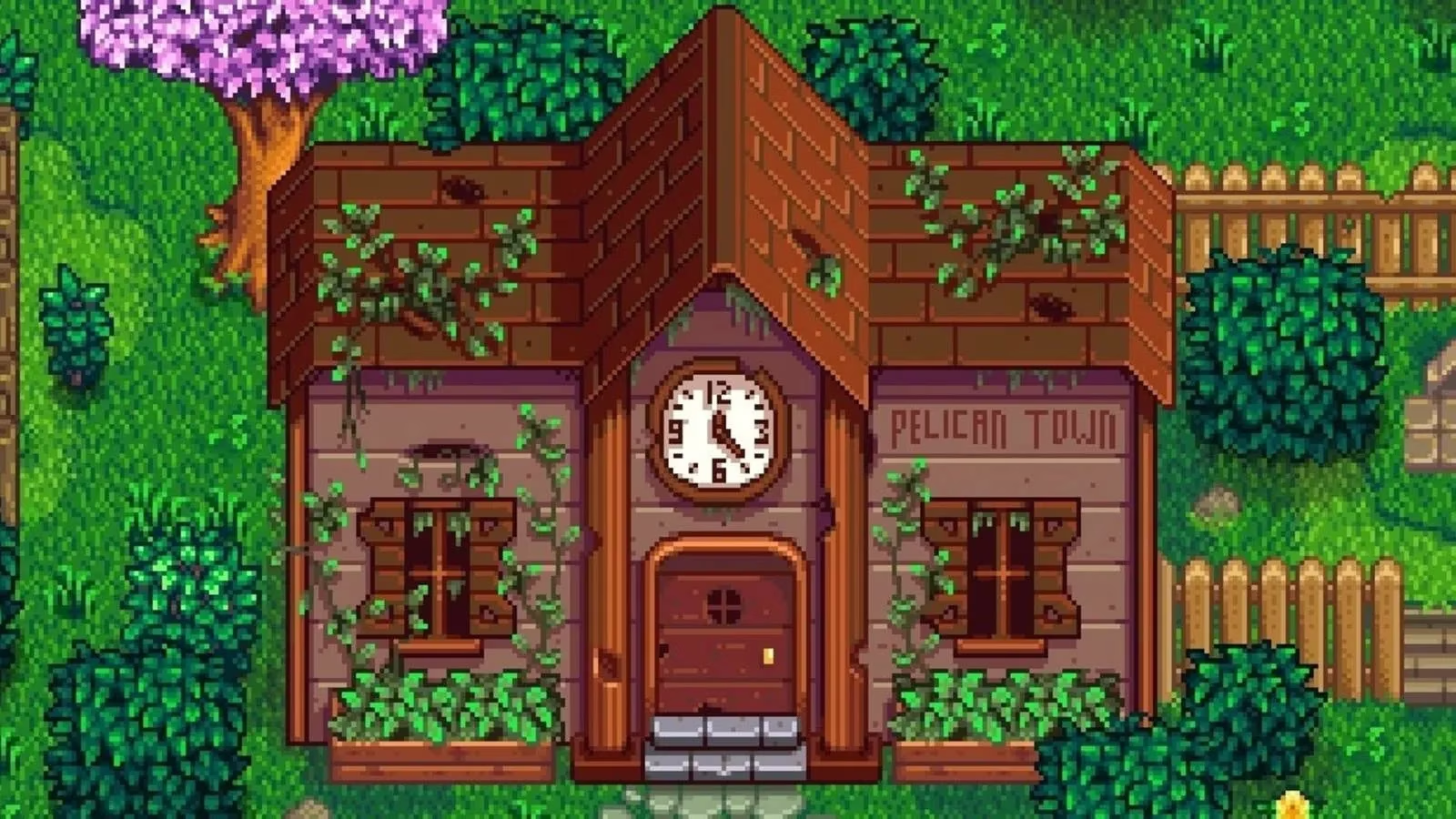
The recipient of this bounty is MonoGame, an open-source framework that serves as the invisible loom upon which countless indie dreams are woven. Like a humble, public library of code, it offers its tools freely to any developer with a vision, asking for nothing in return. For Barone, whose own pixelated paradise was built upon MonoGame's foundations, the donation is a fitting homecoming. The sum itself is staggering in its generosity: a single, flat donation of $125,000, accompanied by a pledge for ongoing monthly support. To understand the magnitude, one must view it through the lens of MonoGame's typical sustenance. The framework's support page reveals a modest monthly income of around $2,200 from its community of 238 sponsors. Barone's contribution, therefore, is not a drop in the bucket but a sudden, life-giving rain upon a parched field, a donation that could sustain the project's heartbeat for years to come.
This framework, though its name may not ring familiar to every player, has been the silent architect behind some of the most beloved titles in recent memory. It is the invisible stage upon which indie dramas and adventures have played out:
-
The Metroidvania Labyrinths: Axiom Verge and its sequel.
-
The Mountainous Struggle: The critically acclaimed platformer Celeste.
-
The Beat 'Em Up Renaissance: Titles like Streets of Rage 4 and Teenage Mutant Ninja Turtles: Shredder's Revenge.
Stardew Valley itself stands as MonoGame's most luminous success story, a game that has transcended its humble origins to become a global phenomenon, a digital hearth for millions. Barone's relationship with his community has been cultivated with the same care he applied to his virtual crops. His philosophy is a refreshing anomaly in an industry often preoccupied with monetization:
| ConcernedApe's Community Ethos | Industry Commonplace |
|---|---|
| 🆓 Free, substantial content updates for years post-launch. | 💸 Paid DLC, season passes, microtransactions. |
| 🤝 Transparent, open communication about development. | 🎭 Marketing cycles and controlled reveals. |
| 🎄 Patching the game on holidays to ensure stability. | 📅 Updates tied to business quarters. |
| ✨ Granting fan art permissions freely, without claiming profit. | ⚖️ Aggressive protection of intellectual property. |
This consistent nurturing has yielded a rare harvest: a game that is adored, and a developer who is genuinely beloved. The affection is palpable, like the warm, collective sigh of a crowd at a symphony. During an appearance at the Stardew Valley Symphony of Seasons, Barone was met with roaring applause—a sound less for a celebrity and more for a cherished neighbor. Players regularly assure him they will wait patiently, however long it takes, for his next endeavor, the eagerly anticipated Haunted Chocolatier. His donation to MonoGame, done without fanfare and likely with humble silence, is the purest extension of this ethos. It is an investment not in his own legacy, but in the communal seed vault for the next generation of solo developers and small teams.
In an era where game engines are often vast, commercialized ecosystems, MonoGame remains a handcrafted toolkit, a digital potter's wheel available to all. Barone's gift ensures this wheel keeps spinning, allowing future creators to shape their own clay. The act itself is a powerful metaphor for the indie spirit: success is not a fortress to be guarded, but a harvest to be shared. The $125,000 is more than money; it is a carefully wrapped packet of heirloom seeds, sent back to the very nursery that provided the first one. It guarantees that the framework that helped birth a quiet farming simulator into a global sensation will remain robust and accessible, ready to underpin the next unexpected masterpiece. As the gaming world looks to 2026 and beyond, this quiet donation stands as a testament that the most impactful growth often happens not in the noisy marketplace, but in the quiet, interconnected soil of community and support, where one developer's gratitude can become the bedrock for a thousand future dreams.
Comments