
In the tranquil yet demanding world of Stardew Valley, where the sun rises and sets on the rhythm of the seasons and the clink of gold in the pocket, marriage is often painted as a union of hearts. Yet, for the pragmatic farmer, one eye is forever on the ledger. The act of choosing a spouse based on the tangible wealth they bring to the homestead may seem a cold calculus, a departure from pastoral romance. Yet, for those treading the gleaming, corporate aisles of the JojaMart route, where every community development project carries a hefty price tag, such considerations are not merely practical—they are essential for survival. Gold, after all, is the lifeblood of expansion, and every coin saved or earned is a step toward prosperity. It is a quiet understanding that in this valley, love and lucre are not always mutually exclusive paths.

Yet, value is a multifaceted gem. The non-monetary worth of a spouse's offerings often outweighs their mere sale price. A stack of  Crab Cakes, gifted with affection, bestows a precious buff to defense and speed—a boon that can mean the difference between a fruitful delve into the mines and a costly trip to the clinic. Sometimes, the greatest profit lies not in selling the gift, but in utilizing its power to forge greater fortunes elsewhere. This delicate balance between immediate gold and long-term utility forms the heart of the valley's most strategic unions.
The Foundation of a Fruitful Union
The core covenant of marriage in Pelican Town remains constant, a gentle rhythm of give and take. A happy spouse, showered with gifts and conversation, becomes a partner in the truest sense. They will, from time to time, lend a hand around the homestead. This aid, however, is as unpredictable as the spring rain. One morning, they might diligently water every parsnip and potato, saving precious time and energy. The next, they might repair a single fence post on a plot long since secured by a grid of gleaming  Iridium Sprinklers. A sweet, if occasionally redundant, gesture.
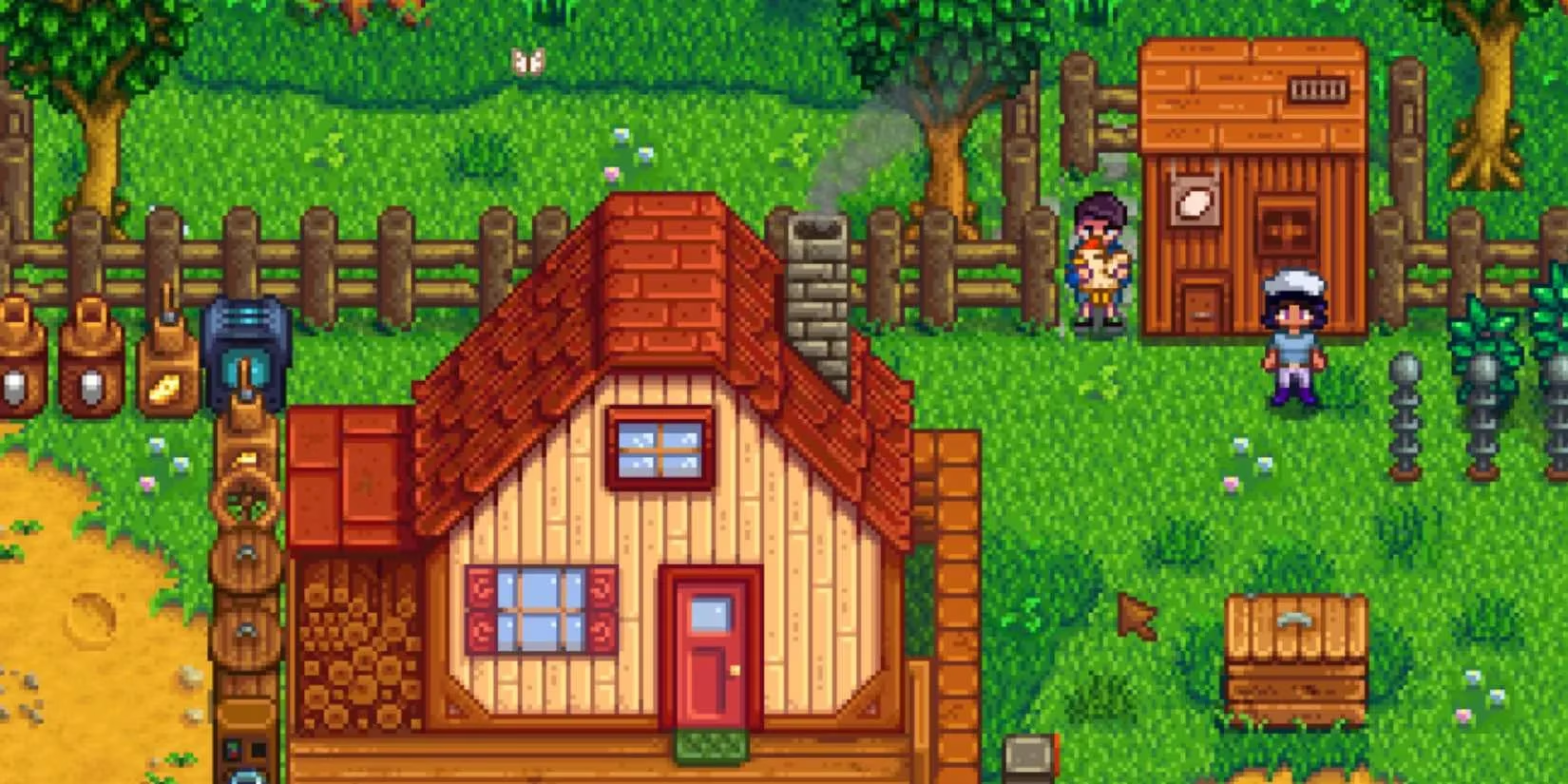
While these chores are a welcome surprise, the wise farmer does not build their agricultural empire on the hope of spousal labor. The randomness renders it an unreliable foundation. Instead, the most consistent and quantifiable benefit of matrimony emerges from the simple, daily act of receiving a gift. This is where the true economic potential of a partnership is revealed, in the quiet exchange of an item handed over with a smile.
The Art of the Gift: A Culinary and Commercial Exchange
Each resident of Pelican Town brings their own unique cache of presents to the marital table. The variety is a tapestry of their personalities: from Sam or Harvey's modest selection of six items, to the expansive bounty of thirteen different gifts offered by the likes of Abigail and Haley. Most often, these presents are nourishing meals—a spouse's attempt to fuel the long days of farming, mining, and fishing.
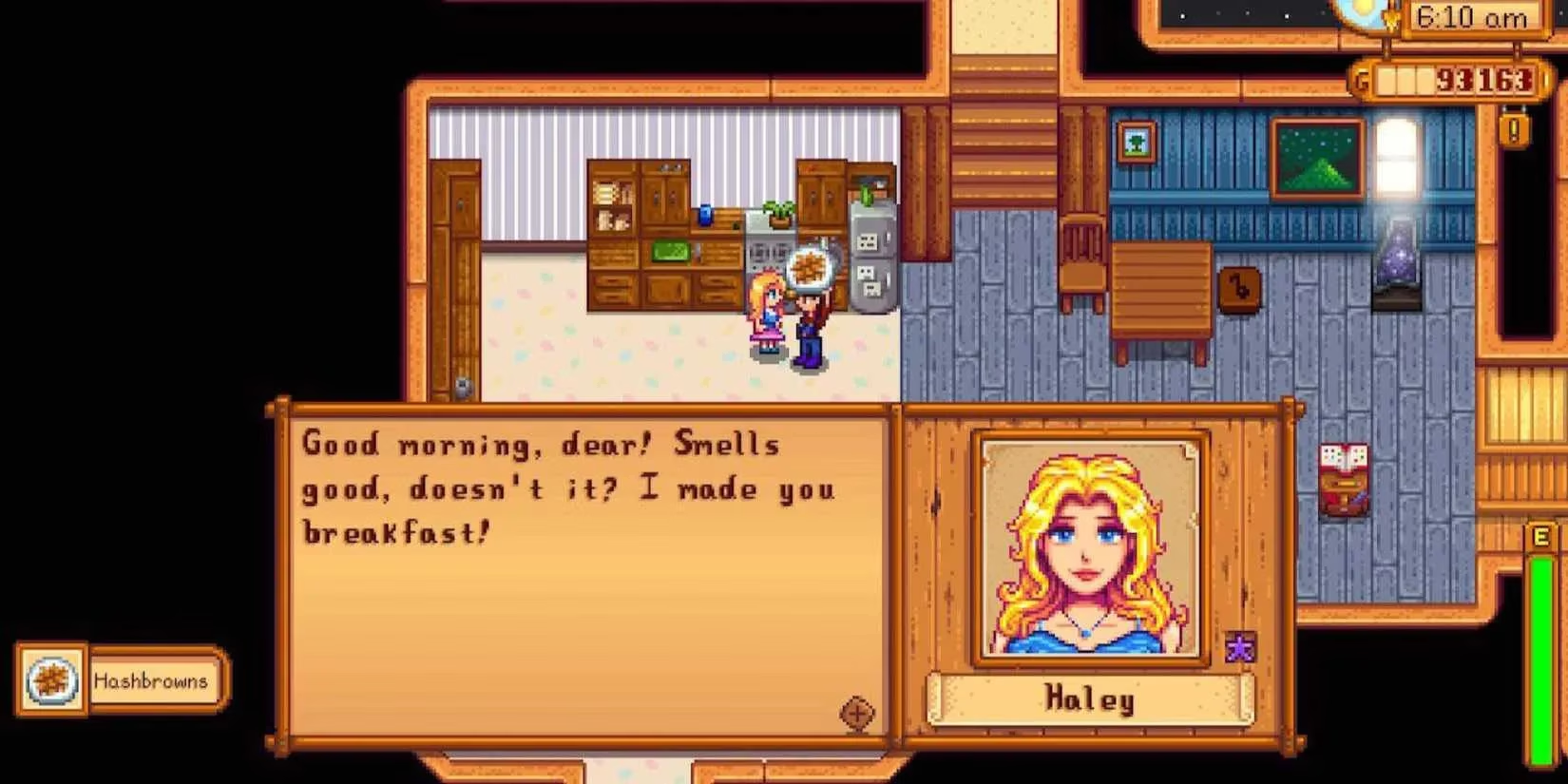
For the profit-minded, however, it is crucial to look beyond the plate. The sale price of most cooked meals far exceeds that of a common gem like an  Amethyst. All spouse-gifted items come at their base quality, unaffected by farming skills or fertilizer. Yet, professional perks like the Rancher or Artisan professions will apply their lucrative multipliers as usual, turning a simple gift into a small windfall.
The rhythm of gift-giving follows the weather. A spouse is most likely to have a present on days when they remain indoors or when the gentle pitter-patter of rain graces the valley. On these gray, drizzly days, the type of gift shifts with the hour:
-
☀️ Morning: A chance for a breakfast meal to start the day.
-
🌙 Evening: An opportunity for a hearty dinner or a sweet dessert.
Not every partner is a master of all meals. Some specialize, offering only breakfasts or only dinners. If the randomized gift is not food, however, it can be received at any point during a rainy day's conversation. Therefore, the most reliable method to check for these profitable presents is to seek out your spouse in the morning and evening on those soft, rainy days—a schedule as predictable and fruitful as the changing seasons themselves.
Calculating Affection: The Most Lucrative Partners
When every corner of the farm is optimized, from the synchronized sprinklers to the genetically perfected livestock, why not extend that efficiency to one's choice of life partner? The key metric becomes the average gold value of the gifts they provide. Examining the base values, and setting aside rare annual gifts like those on Winter 28, a clear financial hierarchy emerges.
The Top Contenders for a Golden Union:
-
Harvey: The diligent doctor claims the top spot through quality over quantity. His small but potent selection of high-value meals, like the nourishing Complete Breakfast, provides a consistently high average return.
-
Emily: The free-spirited seamstress is a close second, her value bolstered not by food, but by craft. She gifts materials like
 Cloth,
  Duck Feathers, and
  Wool. For a farmer with the Artisan profession, which increases the value of these goods, Emily quietly ascends to the number one position.
 -
Shane: Though his journey is one of personal struggle, his contributions to the pantry are solid. Gifts like Pepper Poppers are not only valuable but also carry the useful Farming +2 buff, blending profit with practicality.
The Utility vs. Value Dilemma:
In contrast, other beloved candidates offer gifts of function rather than pure fortune. Maru and Abigail might present useful tools like  Bombs, which can clear mine passages in a flash. Yet, in the cold calculus of profit, these items are simply not high-value commodities. A bomb is priceless when needed, but its sale price is a pittance compared to a gourmet meal. Therefore, for a marriage founded on financial optimization, it is best to steer clear of partners whose gifts, while thoughtful and practical, do not significantly swell the coffers.
Ultimately, the choice of a spouse in Stardew Valley is a deeply personal one, a blend of heart, habit, and homestead strategy. Yet, for the farmer whose gaze is fixed on a future of boundless barns and crystalariums, understanding the economics of affection is not cynical—it is simply another form of cultivation. In the quiet of the farmhouse, as the rain taps against the window and a spouse offers a gift, that offering can be more than a token of love; it can be a brick in the foundation of an empire, a small, daily dividend paid in the currency of a shared life.
Comments