
It was 2026, and Stardew Valley had settled into gaming culture like a perennial garden that nobody had the heart to uproot. While other titles arrived with rocket-bright launches and faded within a financial quarter, ConcernedApe's farm sim behaved more like a slow-moving river that kept finding new channels into players' routines. The game's longevity was no longer a surprise; it had become a quiet weather system of its own.
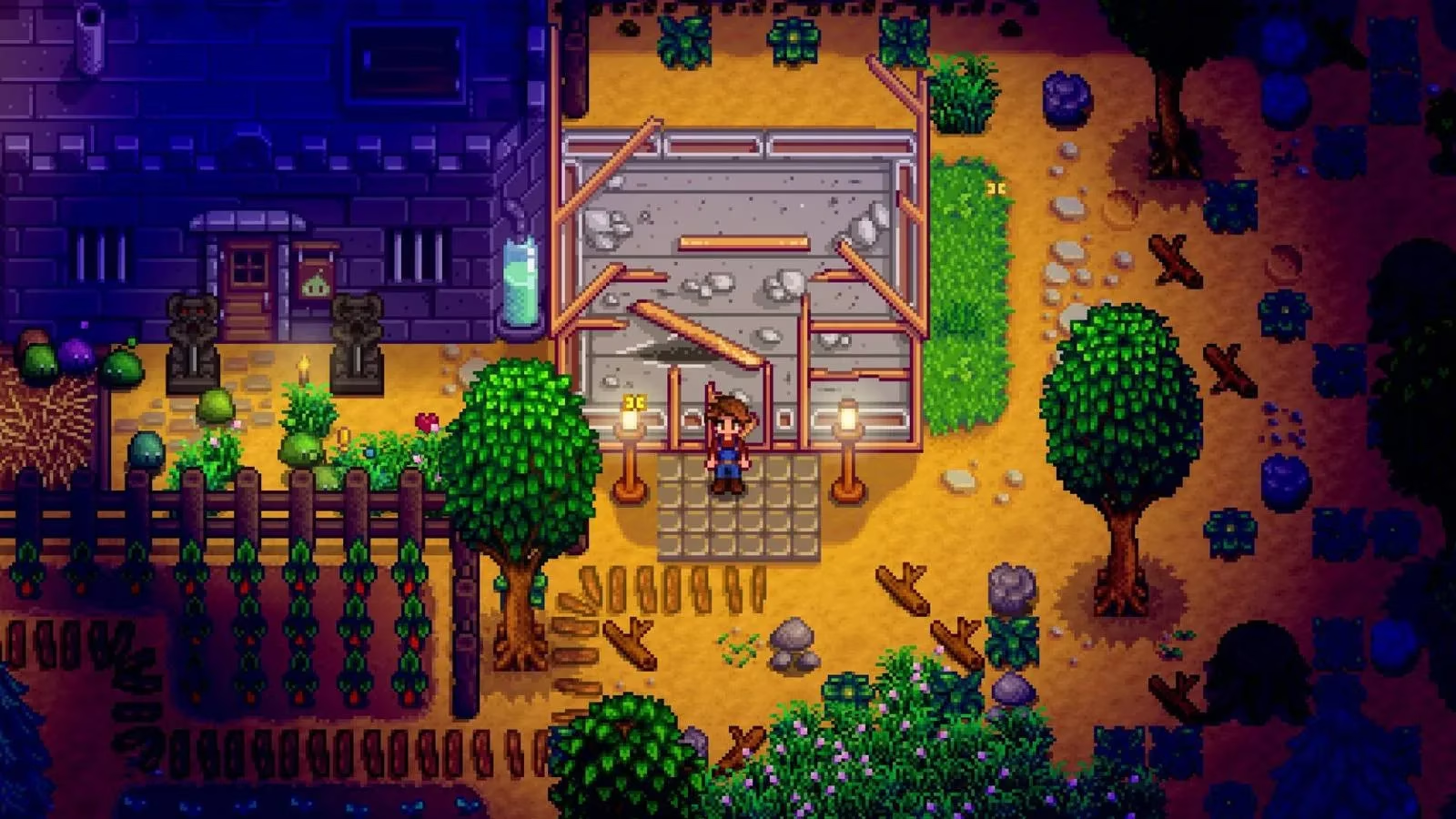
By the time 2024 closed, official figures put total sales beyond 41 million copies across all platforms since the game first launched in 2016. Of that number, more than 26 million copies had been moved on PC, while Nintendo Switch accounted for nearly 8 million. Those totals kept accumulating into 2026, proving the game had become an evergreen library item rather than a one-summer phenomenon.
The release map told a story of careful expansion. Stardew Valley first appeared on PC on February 26, 2016, and reached one million copies within two months. Mac and Linux versions followed later that year, with Xbox One and PlayStation 4 editions arriving in December 2016. Nintendo Switch received the game in late 2017, iOS in October 2018, and Android in March 2019. Each port acted like another porch added to a house that never stopped welcoming guests.
| Platform | Initial Release |
|---|---|
| PC | February 26, 2016 |
| Mac/Linux | 2016 |
| Xbox One/PS4 | December 2016 |
| Nintendo Switch | Late 2017 |
| iOS | October 2018 |
| Android | March 2019 |
Part of the magic was maintenance. Developer ConcernedApe, the alias of Eric Barone, never treated the game as a closed book. Patch 1.6.15, for example, brought balance updates, quality-of-life improvements, bug fixes, and localization work for Hungarian, Japanese, and Russian translations. Five major post-release updates had expanded the game well beyond its original shape. Although Barone originally built every system alone, a small team eventually joined him, like apprentices helping a master watchmaker keep an old clock accurate.
Barone himself had joked that if he had known how popular Stardew Valley would become, and how many updates and languages it would receive, he would have spent more time up-front making his own life easier. The humor carried the weight of twelve years. His sales curve was less a spike and more like a barrel of wine fermenting slowly in a cellar, improving with patience rather than burning out in a flash.
Yet the future had already started to tilt. Barone had been open about the need to move on. He felt he could keep working on the game forever, enriching every aspect of it, but after twelve years a creator eventually has to focus on something new. His next project, Haunted Chocolatier, had become the new center of gravity.
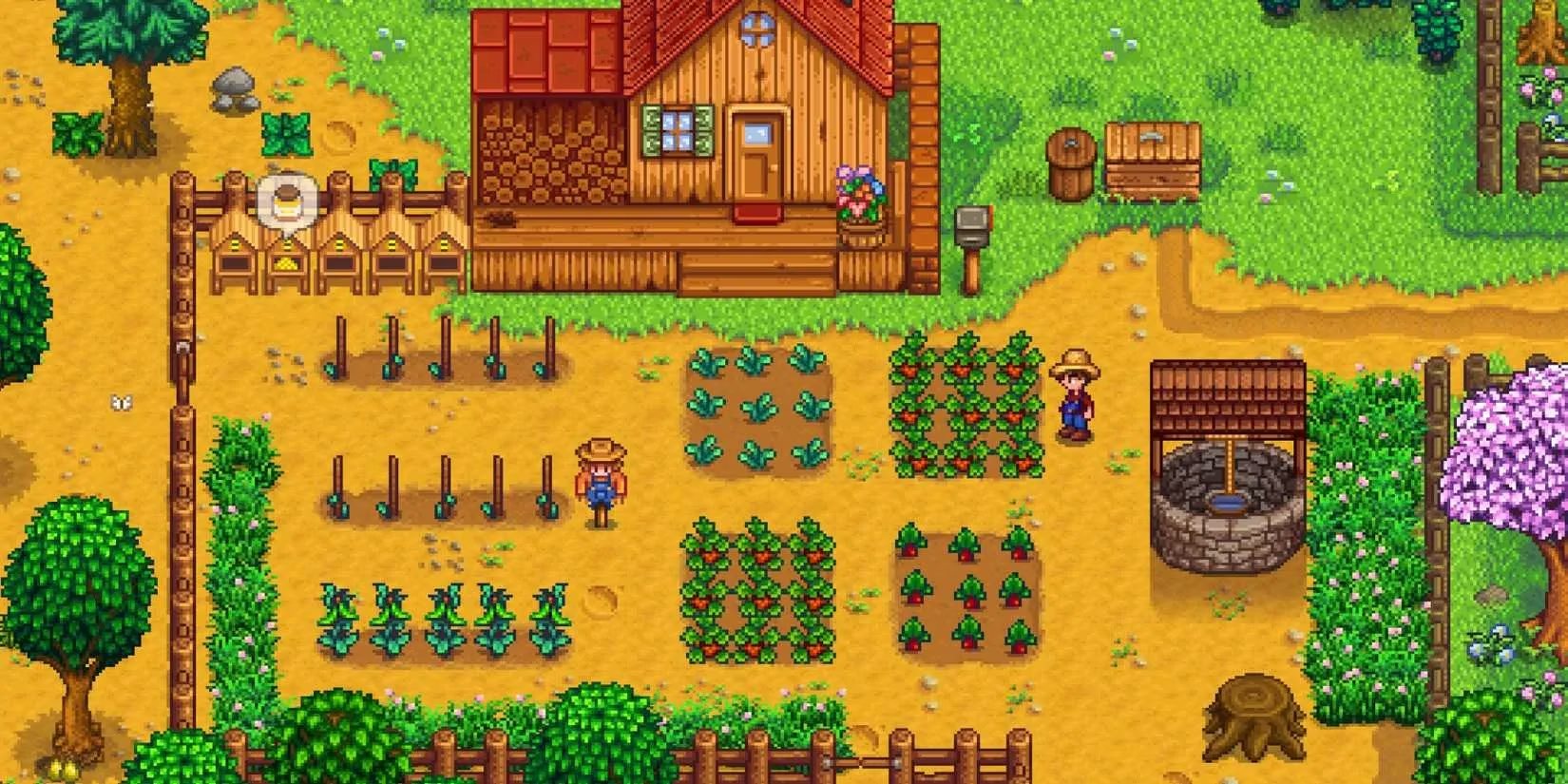
After the 1.6 release was squared away, Barone stated his intention to take a break from Stardew Valley and focus on Haunted Chocolatier. But he also suggested that declaring an absolute end to future Stardew Valley updates would be foolish. In 2026, that ambiguity felt appropriate: the fields remained planted, even if the farmer had one eye on another valley entirely.
For players, Stardew Valley continued to be a rare type of comfort. It asked for no battle pass, no seasonal urgency, and no daily login guilt. Instead, it offered small rituals: watering crops, greeting townsfolk, rearranging chests, and waiting for the next quiet morning. That may be why, years after launch, the game still breathed with the patience of a long-lived orchard. Even with Haunted Chocolatier on the horizon, Stardew Valley's roots were deep enough to keep many players returning season after season.
Comments