
Even as it sails past its tenth anniversary, Stardew Valley continues to operate like a well-kept garden, perpetually sprouting new surprises that delight its dedicated community. The latest example to surface involves a humble piece of clay and the game's fish tanks, proving that the beloved farming simulator remains a treasure trove of hidden interactions. A player's accidental discovery that clay transforms into a miniature castle when placed in an aquarium has reignited conversations about the game's astonishing depth, a testament to its enduring appeal in 2026. This seemingly small detail is emblematic of the game's core philosophy: rewarding curiosity and nurturing creativity in a world that feels endlessly explorable.
The Accidental Castle: A Testament to Hidden Depth
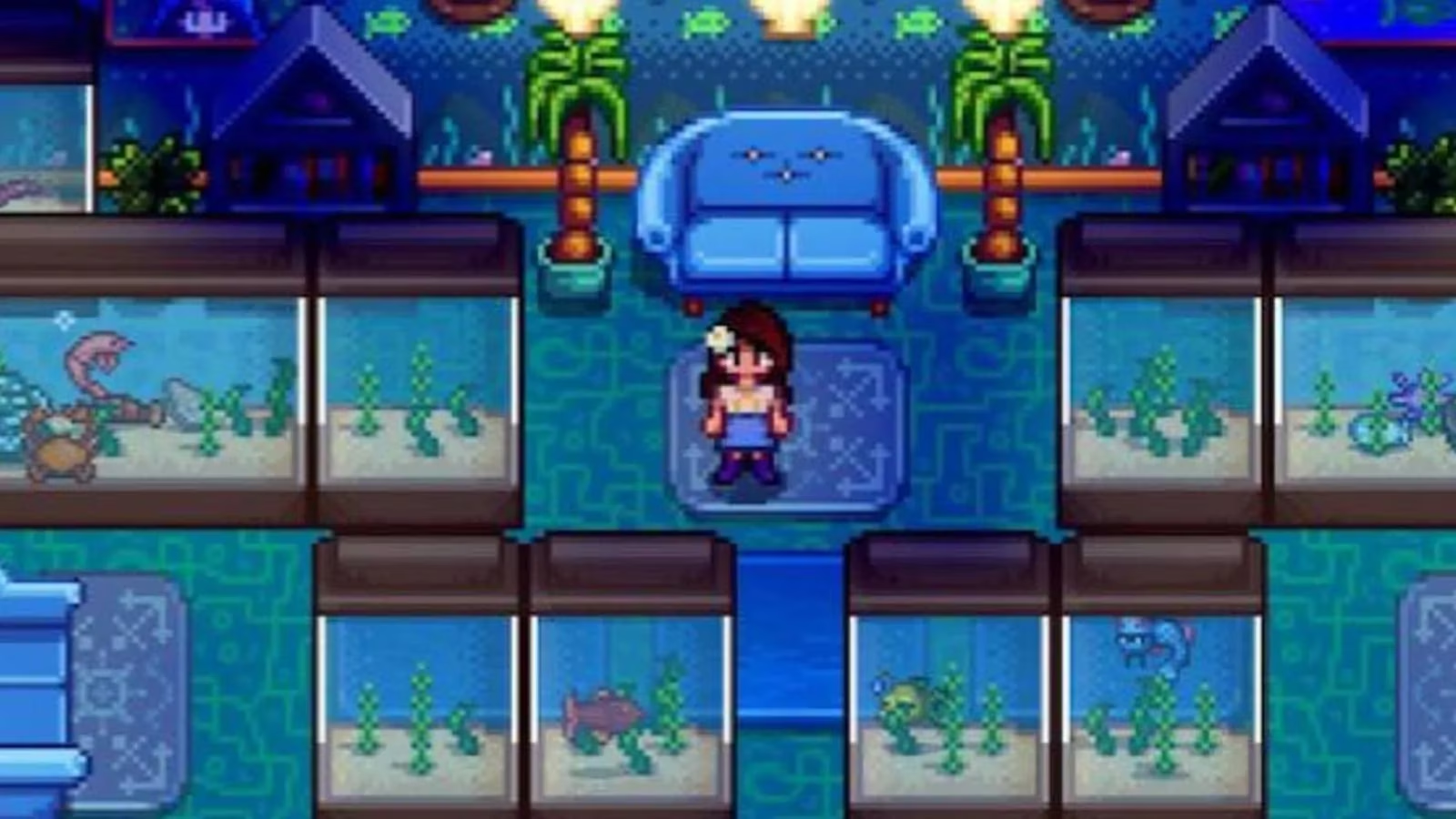
The discovery, originally shared by a player known as havanakgh, sent ripples through the community. The simple act of placing a lump of Clay into a fish tank—an item typically used for crafting or as a gift—triggered a charming transformation, creating a decorative castle for aquatic residents. For many veteran players who thought they had seen it all, this was like finding a secret passage in a home they had lived in for years. The fish tank, often seen as a straightforward display case for the game's diverse marine life, was suddenly revealed to be a more versatile canvas for player expression.
Where to Find Fish Tanks and How to Decorate
Players looking to create their own underwater dioramas have several avenues to acquire a tank. The primary sources, as of 2026, remain consistent with the game's long-standing economy:
| Vendor / Source | Location | Notes |
|---|---|---|
| Willy's Fish Shop | Beach, south of Pelican Town | The classic source for all fishing-related items. |
| Robin's Carpenter's Shop | North of Pelican Town | Available via the Furniture Catalog. |
| Qi's Walnut Room | West of Ginger Island | An end-game location for seasoned farmers. |
Once a tank is procured, the decorating begins. While fish, coral, and seaweed are standard fare, the community's response to the clay castle discovery highlighted a bizarre and wonderful catalog of alternative decorations. Fellow players quickly shared their own unconventional tank fillers, including:
-
A Pineapple, adding a tropical flair.
-
The Ancient Sword, for a sunken treasure aesthetic.
-
Mayor Lewis' Purple Shorts, perhaps the game's most infamous (and embarrassing) lost item, now serving as a peculiar conversation piece beneath the waves.
This flexibility allows players to use their farmhouse not just as a homestead, but as a personalized aquarium, a museum of oddities, or a statement of pure whimsy. The fish tank becomes a microcosm of the player's journey, a curated collection of memories and inside jokes.
 Willy would likely approve of such creative uses for his tanks.
The Secret Ingredient: Why Stardew Valley Endures
This ongoing discovery of minute details is the secret sauce that has kept Stardew Valley relevant for over a decade. In an industry landscape that often feels as transient as a summer storm, Stardew Valley has established itself as a perennial, its roots deep in a foundation of heartfelt storytelling, relatable characters, and systems that reward both diligent planning and spontaneous experimentation. The game's ability to make a simple lump of clay feel magical is a masterclass in player engagement.
The game's success is often compared to giants in the life-sim genre like Animal Crossing and Disney Dreamlight Valley, and rightfully so. They all share a core appeal: the power to create and customize a personal space. However, Stardew Valley distinguishes itself with a sense of tangible progression and a world that feels lived-in, where every villager has a schedule and a story. The customization, therefore, isn't just aesthetic—it's woven into the narrative of rebuilding a community and a legacy.
 The humble Clay, now a key to underwater royalty.
A Community of Curious Farmers
The lifecycle of a discovery in Stardew Valley is a beautiful thing to behold. It begins with one player's moment of "what if?"—a question posed to the game's intricate code. The answer, like the clay castle, is then shared with the community, acting as a kind of social pollen that fertilizes the creativity of thousands of other players. Forums and social media light up with new design ideas, screenshots of themed tanks, and reminders of other forgotten interactions. This cycle ensures the game's knowledge base is always evolving, much like the seasons on the farm itself.
New players in 2026 are not entering a static, solved world. They are stepping into a living tradition, where veteran guides can still be surprised by a novice's innocent experiment. The game does not handhold or highlight every possibility; it trusts the player to explore, to try, and to share. This design philosophy creates a sense of shared ownership and wonder that is as rare and valuable as a Prismatic Shard.
Looking Forward: An Evergreen Experience
As we move further into the decade, Stardew Valley stands not as a relic of the past, but as a benchmark for the future. Its continued popularity underscores a timeless desire for games that offer peace, purpose, and the joy of small, personal discoveries. The fact that players are still unearthing secrets related to basic items and mechanics speaks volumes about the care and hidden complexity woven into every pixel.
For the dedicated farmer decorating their hundredth tank, or the newcomer planting their first parsnip, the promise remains the same: there is always something more to find. Whether it's a castle made of mud for your midnight carp, a pineapple centerpiece for your blobfish, or an entirely new interaction yet to be documented, Stardew Valley remains, in 2026, a gift that keeps on giving—a bottomless treasure chest in a quiet patch of digital countryside.
Comments