
Let's be real for a second, folks. I know what you're thinking when you hear "RNG." You're picturing that one time a 95% hit chance missed three times in a row and you rage-quit. I get it. But honestly, as we roll into 2026, I think the hate for Random Number Generators is totally overblown. When done right, luck-based mechanics aren't about getting cheated; they're about creating unique stories, thrilling comebacks, and those unforgettable "holy cow, did that just happen?!" moments. It's all about the art of the gamble, and some games have absolutely nailed it. So, grab a seat, and let me walk you through my personal favorites—the games that made me fall in love with leaving a little bit of fate in the hands of the code.
11. Terraria: Building Your Own Luck
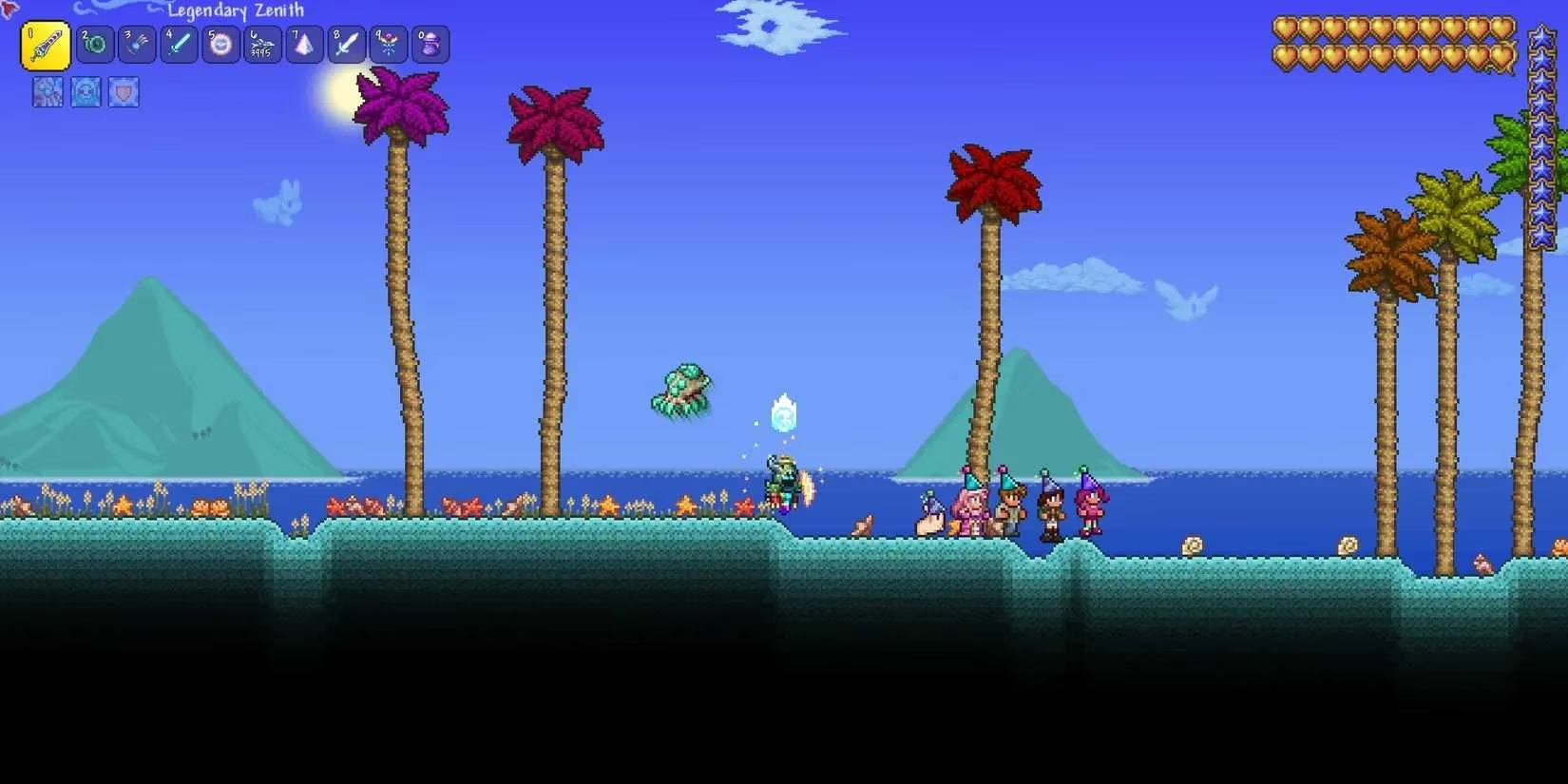
Starting off strong with a classic. In Terraria, everything is a dice roll. Your world seed? Random. That rare Rod of Discord drop from a Chaos Elemental? A brutal 0.2% chance. But here's the kicker—this game makes you an active participant in your own luck. You're not just sitting back and hoping. You're crafting Luck Potions, placing Torches in the right biomes, and even using garden gnomes! It turns superstition into a tangible game mechanic. Sure, you can get screwed by RNG on a reforge, but you can also stumble upon a Slime Staff from your very first slime and feel like the king of the world. The beauty is that even with terrible luck, a skilled player with good prep can still conquer the Moon Lord. It's the perfect balance: RNG gives you exciting possibilities, but your planning and execution seal the deal.
10. Downwell: Controlled Chaos
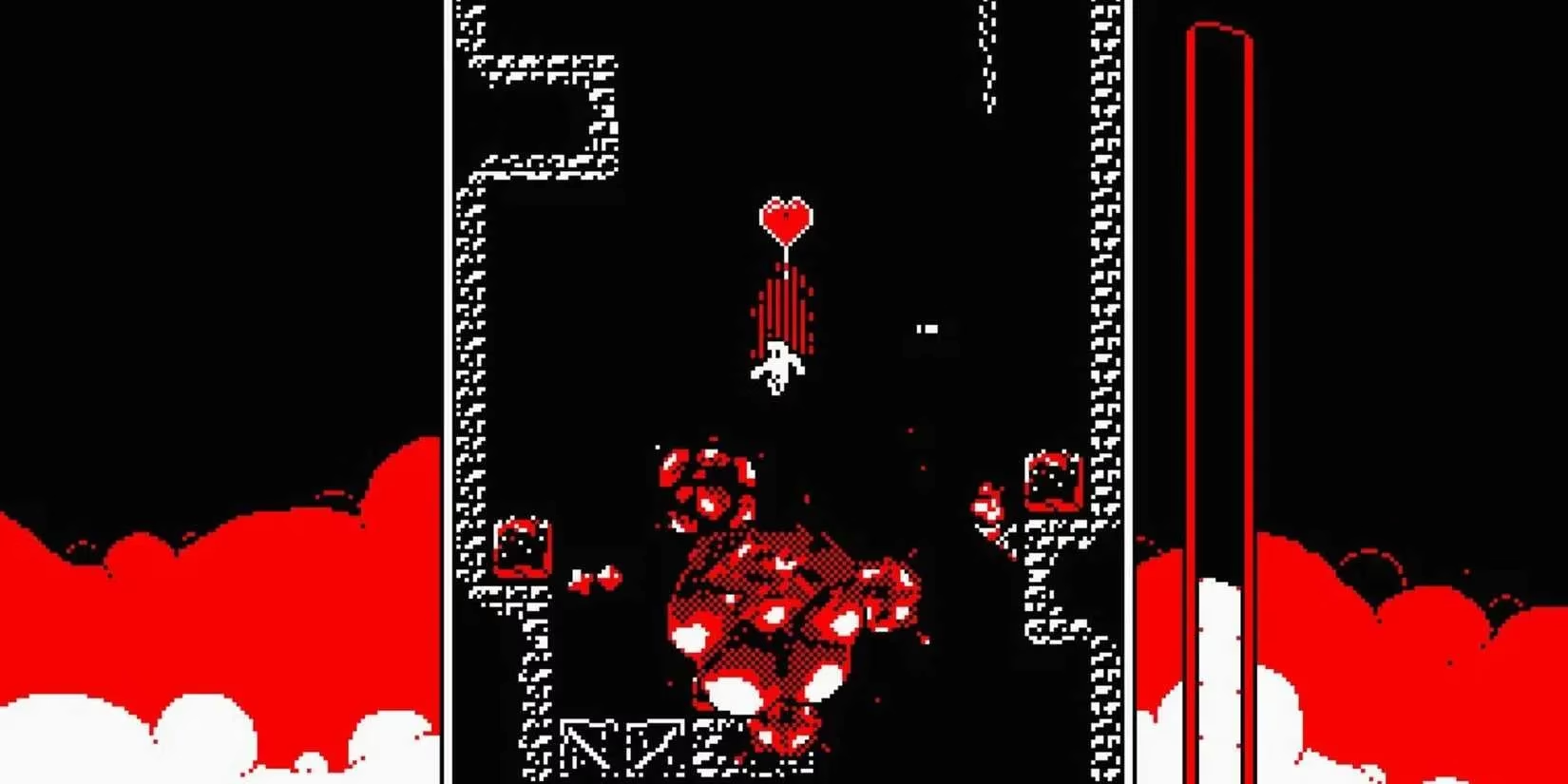
Now, Downwell is a masterclass in minimalistic RNG design. At the end of each level, you're presented with a choice of three randomly selected upgrades. This isn't just a slot machine; it's a strategic puzzle. The genius part? Some of these upgrades directly influence future RNG. You might find a module that lets you reroll your gun choices or one that increases the number of items offered from three to four. You're constantly making this fascinating choice: do I take the solid stat boost right now, or do I invest in becoming luckier down the line? It transforms luck from a passive force into a resource you can manage. It feels less like "the game gave me a bad roll" and more like "I chose not to invest in my odds this time." That's a huge difference!
9. Slime Rancher: The Plort Stock Market
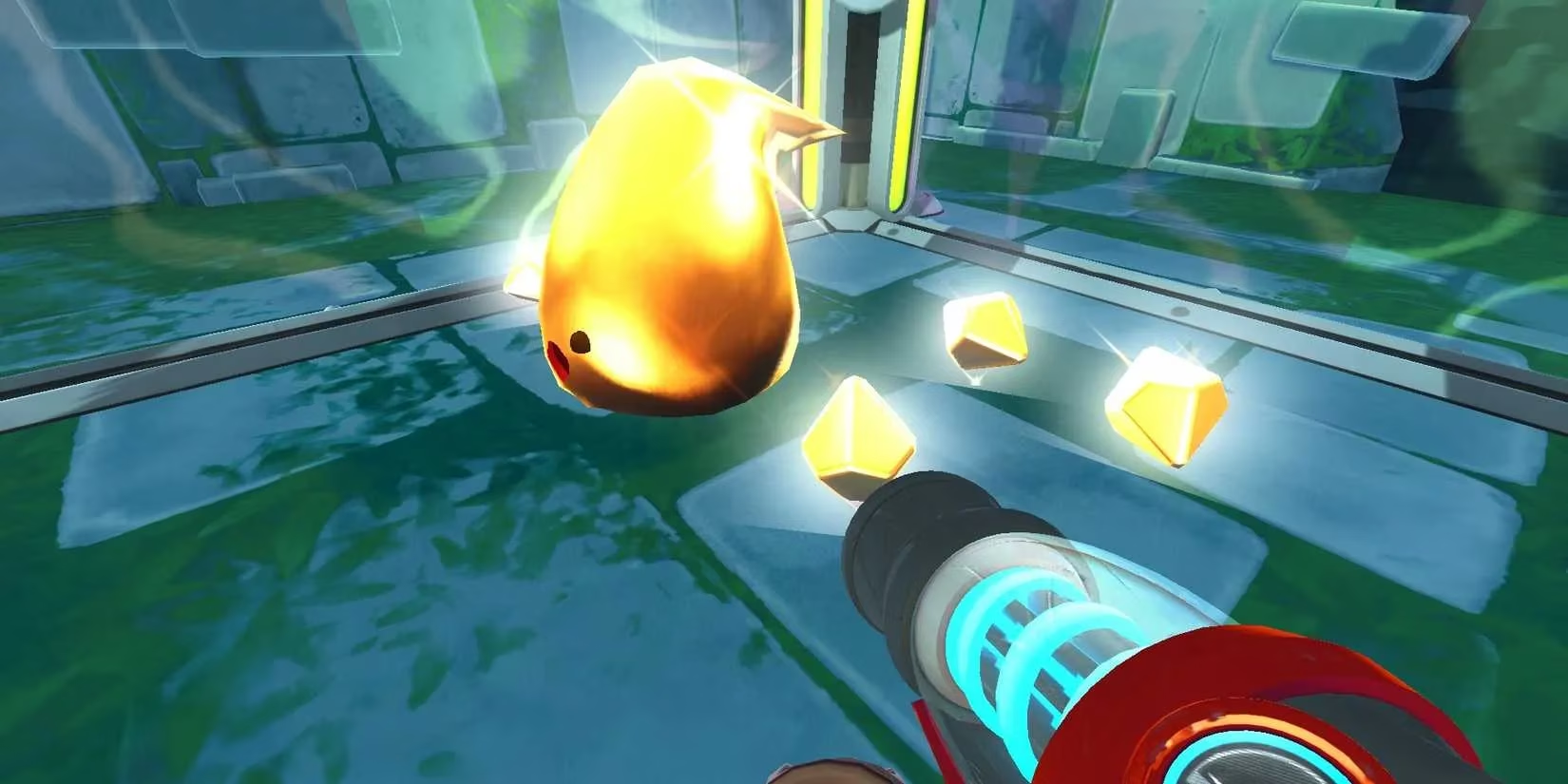
Who knew ranching cute, bouncy slimes could turn you into a Wall Street wolf? Slime Rancher's Plort Market is, hands down, one of the most satisfying RNG systems in a "chill" game. Each day, the prices for different plorts (slime... byproducts) fluctuate randomly. You can deposit thousands of Pink Plorts and watch their value absolutely tank the next morning. It's hilarious and agonizing. This system turns a peaceful farming sim into a tense capitalist strategy game. Do you sell your stockpile of Crystal Plorts today for a decent profit, or do you gamble and hold out, hoping for a market spike tomorrow? There's no real-world consequence, so the thrill of the gamble is pure fun. Getting that notification that Rock Plorts are at an all-time high after you've been hoarding them for a week? That's the good stuff.
8. Fallout 4: VATS - The Tactical Gamble
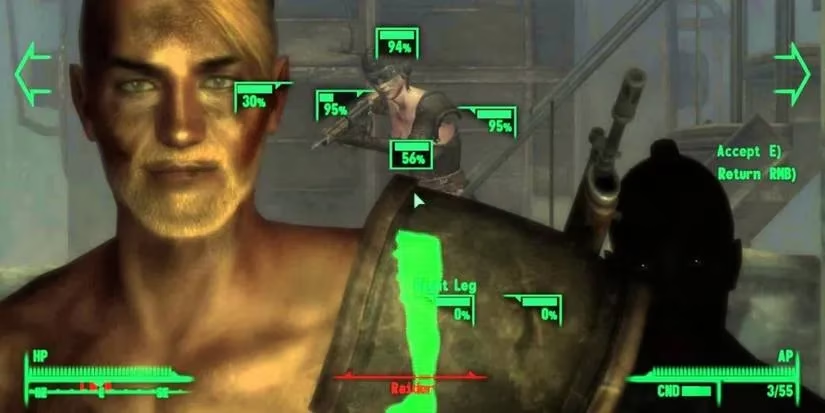
The Vault-Tec Assisted Targeting System (V.A.T.S.) is iconic for a reason. In Fallout 4, they perfected it by making it a slow-motion tool rather than a full pause. You zoom in on a Super Mutant's head: 45% chance to hit. His weapon arm: 67%. His leg: 78%. Do you go for the high-damage, low-odds headshot, or cripple his mobility with a safer bet? Making you wonder if you want to tear through a leg at a 67% chance is the core of the experience. It injects a moment of tactical gambling into every firefight. You build up critical hits in real-time, saving them for that perfect, guaranteed shot. For us gamblers, it's the ultimate tool—a way to say, "I like those odds," and feel like a wasteland sharpshooter when it pays off. Completely optional, but utterly essential for the right vibe.
7. Stardew Valley: Harnessing Daily Fortune
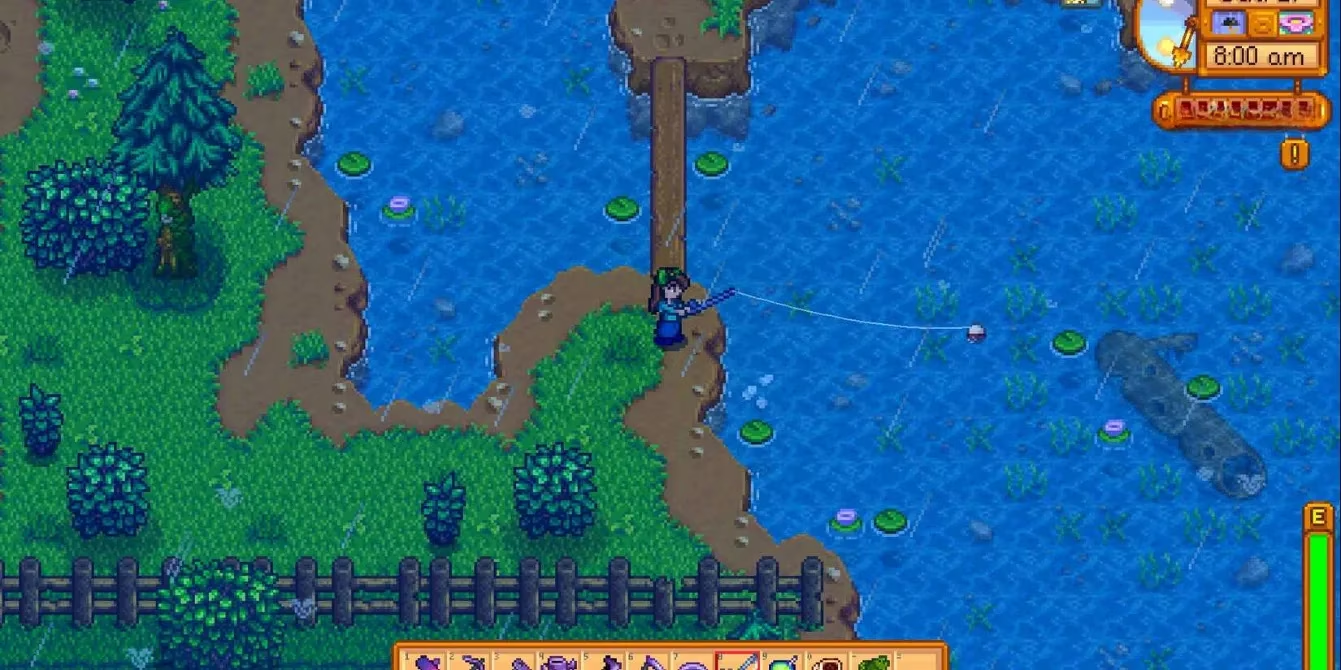
Much like its sibling Terraria, Stardew Valley has a hidden luck stat that governs... well, almost everything. But Stardew teaches you to be proactive. First thing in the morning, you check the TV with your coffee. "The spirits are very happy today!" Heck yeah. It's a good luck day. You know what that means? Time to hit the Skull Cavern. On high-luck days, you'll find better loot, stumble upon staircases and shafts more often, and generally have a more productive (and less infuriating) time. You can then supercharge this with Lucky Lunches, Magic Rock Candy, and Special Charms. It feels incredible to stack all these buffs and then just plow through 50 floors of the mine like you own the place. The RNG is always there, but you learn to bend it to your will through preparation. It’s satisfying as heck.
6. Super Smash Bros. Ultimate: Hype Machine
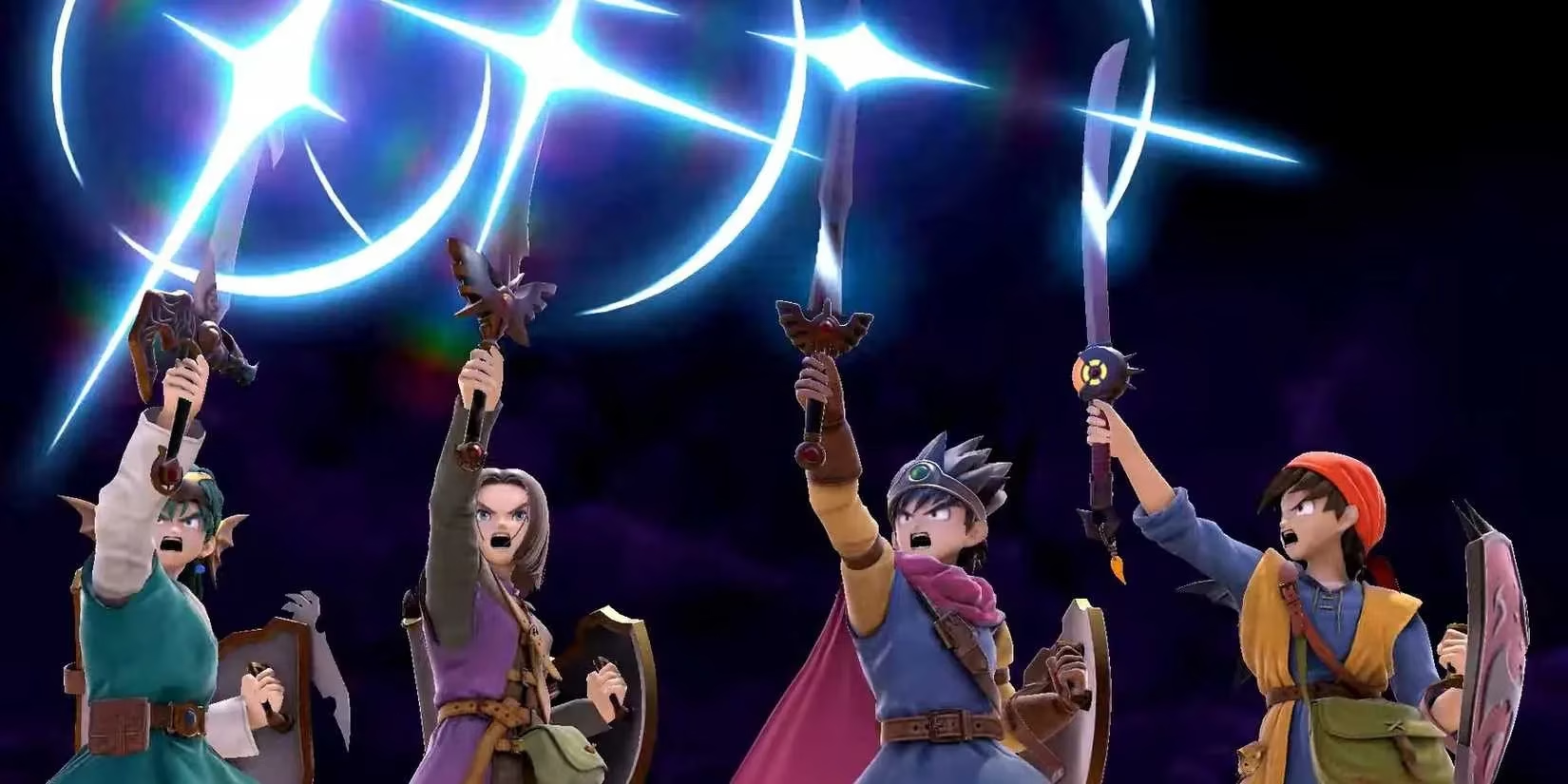
Putting heavy RNG in a competitive fighter sounds like a recipe for disaster, but Smash Bros. has always had a magical way of making it hype. Let's talk about Hero from Dragon Quest. This guy is a walking casino. His regular smash attacks can randomly be critical hits, launching opponents at insane speeds. But the real chaos is his Command Selection down-special—a menu of random spells that can do anything from healing you to creating a massive explosion. You can randomly crit on smash attacks, causing your opponent to almost always die, and the crowd goes wild every single time. Is it balanced for ultra-competitive play? Maybe not. But is it an absolute blast that creates hilarious, memorable moments in every match with friends? Absolutely. It embraces the chaos in the best way possible.
5. Risk of Rain 2: The Gambler's Comeback
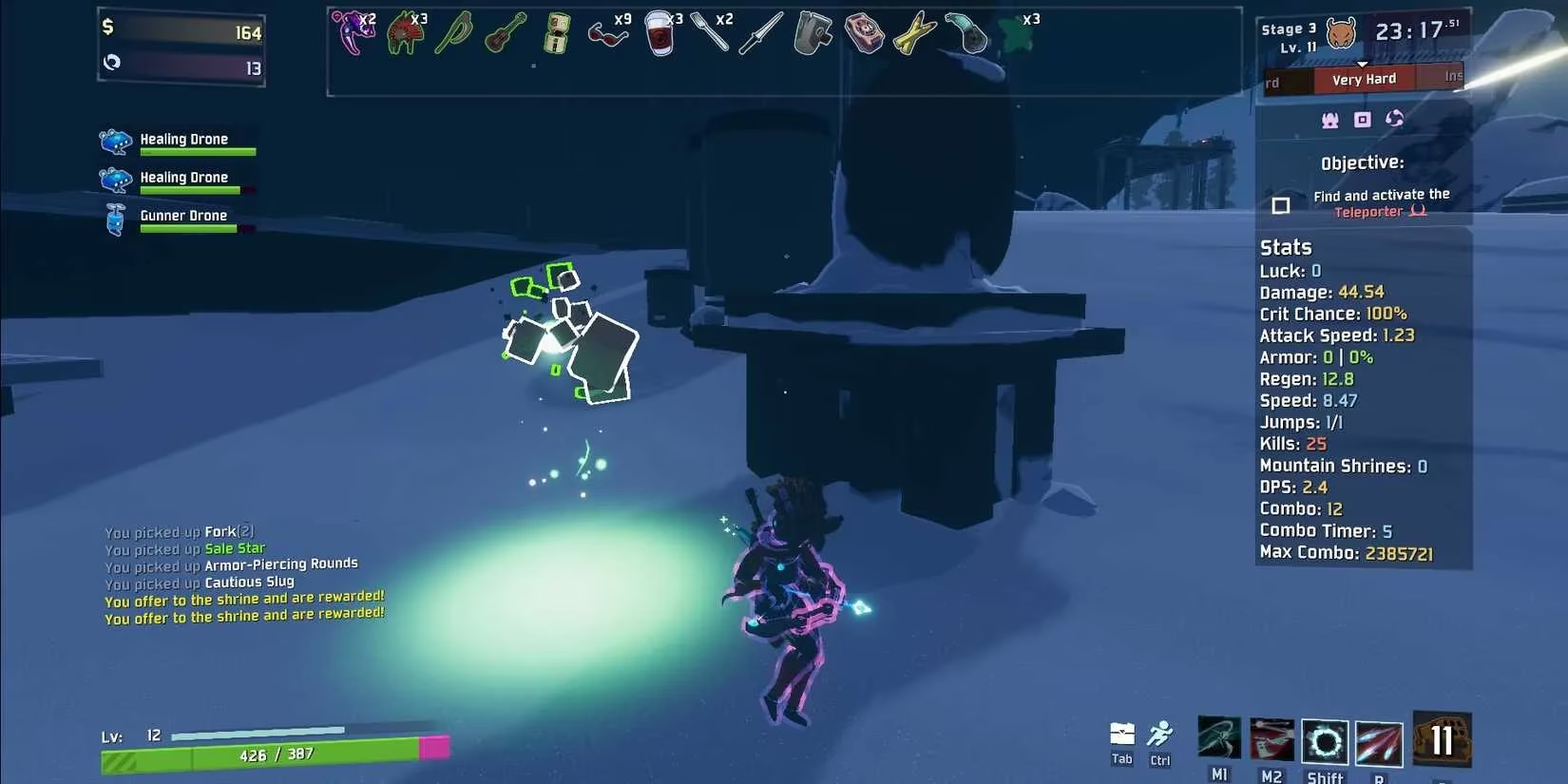
As a roguelike, Risk of Rain 2 is built on random items. But it gives you so many tools to manipulate that randomness it feels like you're engineering your own luck. The crown jewel? The Shrine of Chance. Shrines of Chance are one of the most powerful structures in the game if you're great at gambling. For a small fee of health, it can spit out a common item, a legendary, or even a red-tier boss item. It's the ultimate high-risk, high-reward play. Having a rough run with bad items? Scrap them, gather some cash, and pray to the Shrine for a miracle. Even if you get a Bustling Fungus when you needed a Tesla Coil, the act of taking that gamble is exhilarating. It's a built-in comeback mechanic that puts your fortune directly in your own (slightly bloody) hands.
4. Dead Cells: Rolling for Perfection
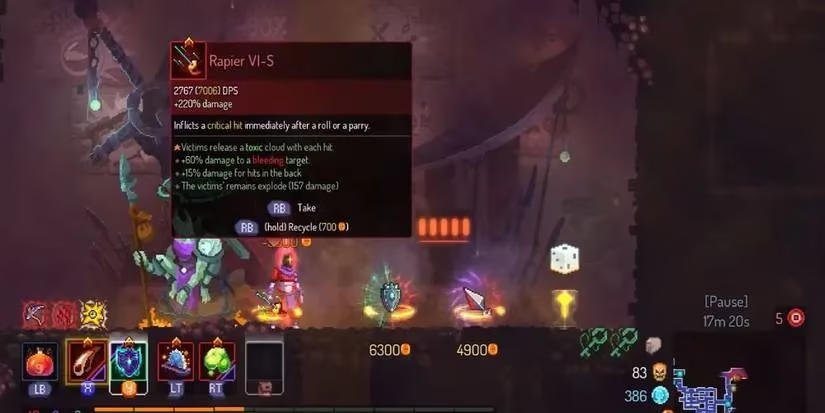
Dead Cells is all about synergy. You don't just want a good weapon; you want a weapon with affixes that work with your skills, mutations, and playstyle. This is where the re-rolling system shines. Between levels, you can spend gold to re-roll the bonus attributes on your gear. Hunting for that "+80% damage to poisoned targets" on your knife when you have a poison cloud skill? That's the grind. The feeling when you finally hit the perfect combo is unmatched. I managed to get a perfect reroll on a sword and blade combo, removing the first and second hits from the combo—effectively creating a new, overpowered weapon. It's a targeted, strategic use of RNG. You're not just hoping for good loot; you're investing resources to sculpt the perfect build from the random parts you're given. It feels deeply rewarding.
3. Dicey Dungeons: The Name Says It All
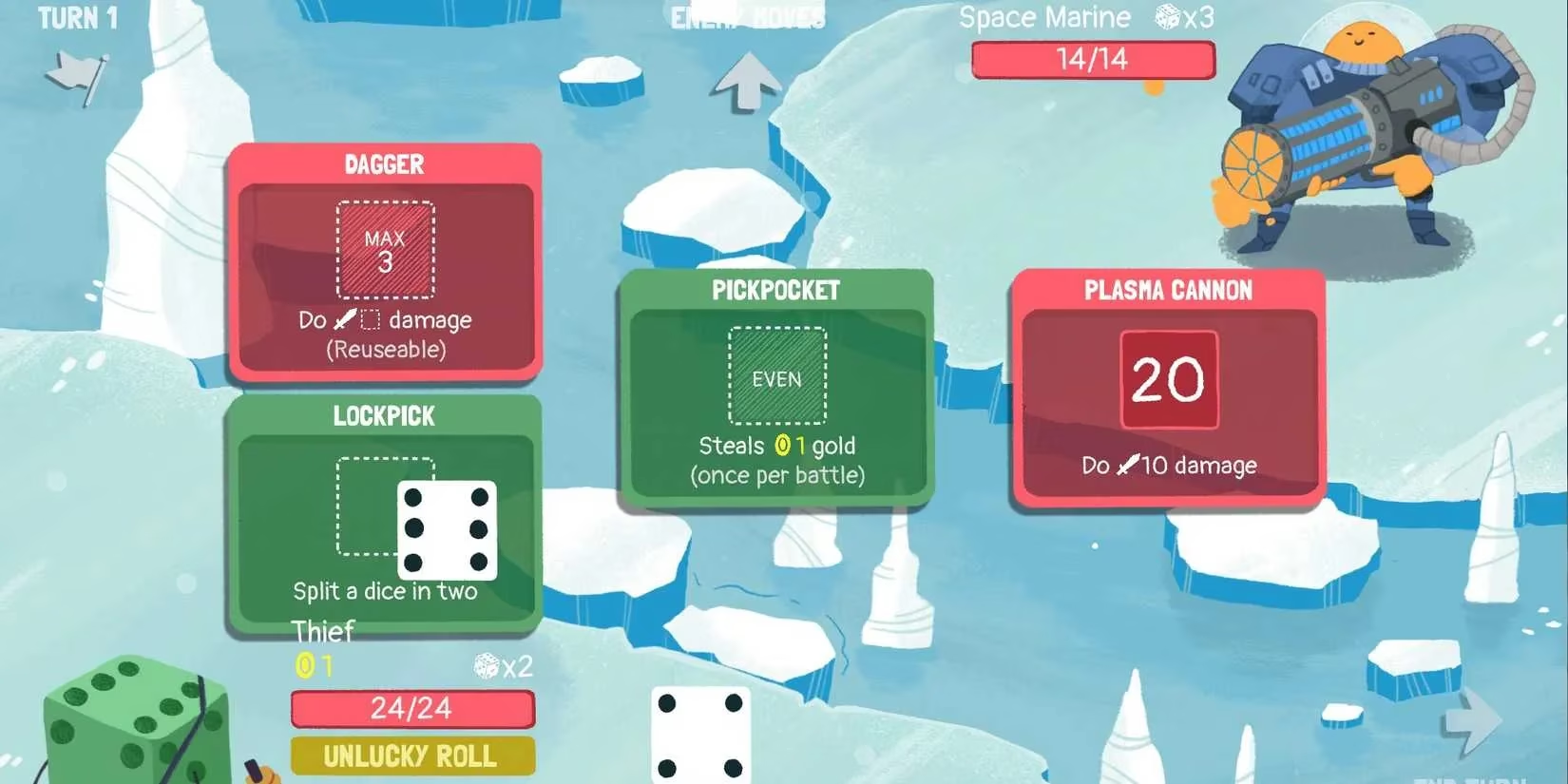
If you need a game that fully commits to the bit, Dicey Dungeons is it. A dungeon crawler heavily centered on its random elements is an understatement. Your attacks, your defense, your special abilities—they all require you to roll dice and use the results. A sword might need a 4 or higher to activate. A shield might absorb damage equal to your roll. It forces you to think probabilistically. You manage your equipment loadout to cover different number ranges, you use gadgets to manipulate dice, and you always have a backup plan for when you roll a dreaded 1. It’s not about eliminating randomness; it's about building a robust strategy that can survive it. Getting a run where your gear perfectly complements your dice rolls is a feeling of pure, unadulterated cleverness.
2. Tetris: The Illusion of Randomness
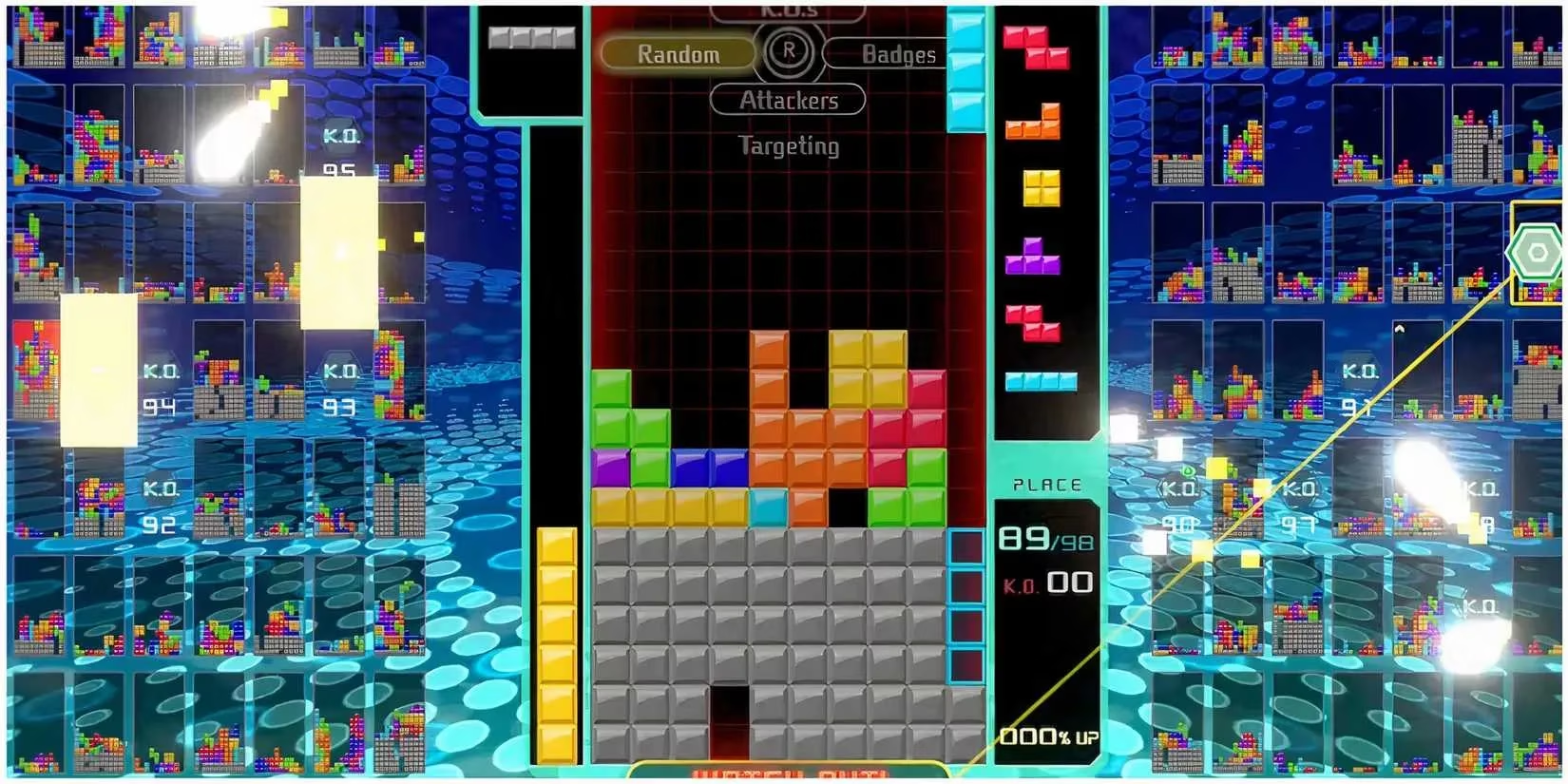
We end with perhaps the most elegant RNG system ever designed. Tetris doesn't give you purely random pieces. It uses a "bag" system: all seven tetrominoes are shuffled into a bag, and you're dealt them one by one. Once the bag is empty, a new set of seven is shuffled. This alone eliminates the nightmare of never getting an I-piece for 50 blocks. Then, they added the hold mechanic, letting you store one piece for later. This is genius game design. It means your skill is the focus, while never letting you forget about the strategy of managing the shuffled pieces. The randomness dictates your immediate tactics ("Do I use the Z-piece now or hold it?"), but it never denies you the tools you need in the long run. It's the perfect example of RNG providing variety and challenge without ever feeling unfair. It's why, decades later, it's still the king of the puzzle genre.
Wrapping It Up
So there you have it. From the stock markets of a slime ranch to the dice-filled dungeons of, well, Dicey Dungeons, these games show that RNG doesn't have to be the villain. At its best, it's the spice that makes every playthrough unique, the catalyst for emergent stories, and the source of those clutch moments you'll be talking about for weeks. In 2026, we're lucky (pun intended) to have developers who understand that the goal isn't to remove chance, but to make playing with it an absolute blast. Now, if you'll excuse me, I've got some plorts to sell and some dice to roll. Wish me luck! 🎲
Comments