
It is almost funny to imagine now, in 2026, when cozy games have become a mainstream comfort food for millions of players. Titles like Animal Crossing: New Horizons and Stardew Valley sit comfortably alongside blockbuster shooters and open-world adventures. Yet the roots of this gentle genre stretch back to a quieter time, and one game in particular quietly changed everything: Harvest Moon 64. Released on the Nintendo 64, it did not just plant a few virtual crops; it planted the seeds for an entire genre that would eventually bloom into the cozy gaming phenomenon players know today.
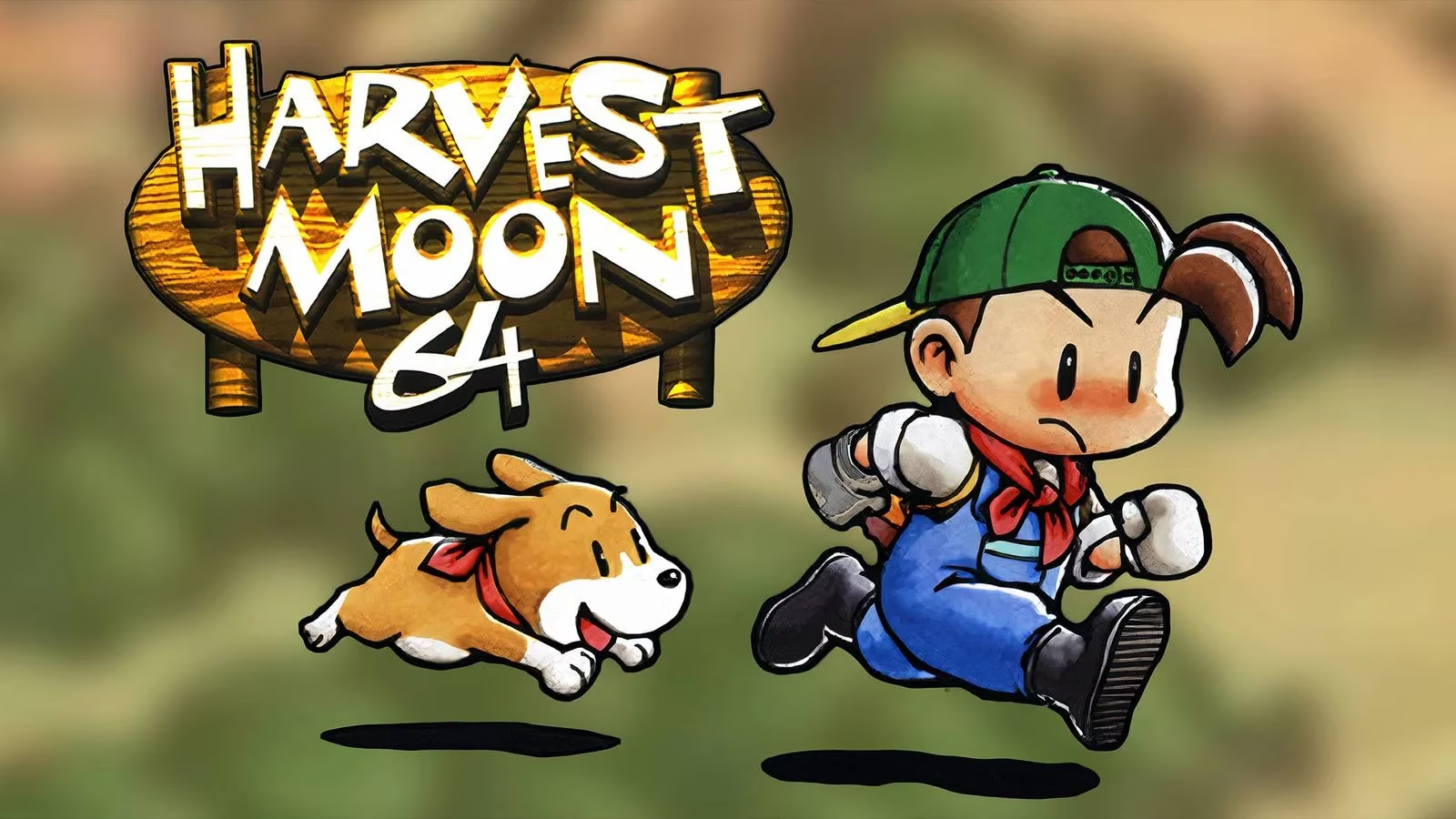
Back when Harvest Moon 64 first appeared, information about it was genuinely scarce. Its marketing was minimal, and many players stumbled upon it almost by accident. That mystery did not hurt the game, though. Instead, it helped it rise to cult-classic status. Rental-store copies were famously difficult to find, and devoted players poured hours into a premise that felt unfamiliar at the time. Everyday activities like tending a garden or chatting with townsfolk were not exactly the norm in an era dominated by platformers and fighting games.
Even so, Harvest Moon 64 was not the first farm life simulator. Technically speaking, it was the third entry in what would later be called the Story of Seasons series, even though that branding did not emerge until 2014. That detail matters because it shows the game did not invent the genre wholesale. Instead, it took the ideas of its predecessors and sharpened them into something far more influential. Many modern cozy game developers, including Stardew Valley creator Eric Barone, point to this third entry rather than the earlier ones when discussing their inspirations.
A surprising number of staple cozy game systems can be traced directly back to Harvest Moon 64. Among the innovations it cemented were:
-
💍 Rival marriages, which made the social world feel alive even when the player was not directly involved.
-
🗓️ More intricate NPC schedules, with villagers going about their own routines.
-
🎉 Seasonal festivals that offered mini-games and chances to bond with the community.
-
🌗 A real-time day-night cycle that actually influenced NPC behavior.
-
🎣 More thoroughly developed fishing and mining mechanics.
-
🧊 The first 3D entry in the series, which brought the whole genre to life in a new way.
These may sound ordinary now, but at the time they were quietly revolutionary.
The core gameplay loop of Harvest Moon 64 will feel instantly familiar to anyone who has played a modern cozy farm sim. Players inherit a neglected farm and are tasked with restoring it to its former glory. Beyond crops, they can raise livestock, feed animals, and protect them from bad weather. The village itself is full of characters with distinct personalities and daily schedules. Building friendships takes time, and players can even pursue marriage, a feature that added a surprising amount of emotional depth for a game from that era.
Life in the valley follows a rhythm. Each season brings unique festivals and events, while the day-night cycle pushes players to manage their time and energy carefully. Fishing and mining provide alternative sources of income and a welcome break from the more demanding farm work. In short, Harvest Moon 64 balanced relaxation with gentle pressure, a formula that countless later games would borrow, refine, and celebrate.
Fast-forward to 2026, and the influence is impossible to miss. Stardew Valley, of course, was shaped in large part by its creator's love for Harvest Moon 64. Fields of Mistria has been described as a 'spiritual successor' to Harvest Moon, and its inspirations clearly trace back to the systems Harvest Moon 64 cemented. The My Time series, including My Time at Portia and My Time at Sandrock, owes a similar debt, with the upcoming My Time at Evershine continuing that legacy. Each of these games expands the formula, but the foundation remains recognizable.
In many ways, Harvest Moon 64 is the quiet cornerstone of the cozy game genre. Its innovations, from dynamic social systems to seasonal mechanics, laid the groundwork for a style of play that values calm, connection, and community. The genre has grown and evolved, but the spirit of Harvest Moon 64 remains present in nearly every modern farm life sim. Its legacy is not just nostalgia; it is a standard. Even 25 years later, players who boot up a cozy game are, knowingly or not, stepping into a world that a humble N64 title helped build.
Comments