
Amelia had spent countless hours on her tablet, tending to her pixelated paradise in Stardew Valley. She had married Sebastian, completed the Community Center, and even reached the bottom of the mines—all while commuting to work. Yet, an itch for something more lingered. Could she share her farm with her best friend, who always boasted about his ginger island exploits on PC? One rainy afternoon in the spring of 2026, she discovered a secret that would change her mobile farming life forever: the experimental multiplayer mode, quietly introduced in the 1.6.9 update, was now within reach.
The multiplayer feature has always been a cornerstone of the Stardew Valley experience on PC and consoles, yet it remained conspicuously absent from mobile devices. That changed in late 2024 with update 1.6.9, but the addition didn’t come with a glowing neon sign. Instead, it was tucked behind a charming Easter egg—a sequence of leaf taps straight out of a retro cheat code manual. Amelia’s heart raced as she learned that the feature was labeled “experimental,” a warning that promised both wonder and potential hiccups. What kind of bugs might lurk beneath the soil? Would the game crash right before she and Liam could catch the Legend? The fear only made the discovery sweeter.
To begin this quiet revolution, one must return to the game’s title screen, a place where most players mindlessly tap to load their single‑player save. The left side of the screen is adorned with clusters of leaves, seemingly decorative. But as Amelia soon memorized, those leaves hide a hidden command. She took a deep breath and tapped in the celebrated sequence: Up, Up, Down, Down, Left, Right, Left, Right. The rhythm felt oddly nostalgic, like unlocking a secret in a classic arcade cabinet. Then came the final step—tapping the tiny question mark icon at the bottom of the screen. A menu flickered open, and after dismissing it, she saw the fabled \u0022Co‑op\u0022 button materialize right there on the title screen. The door had swung open.
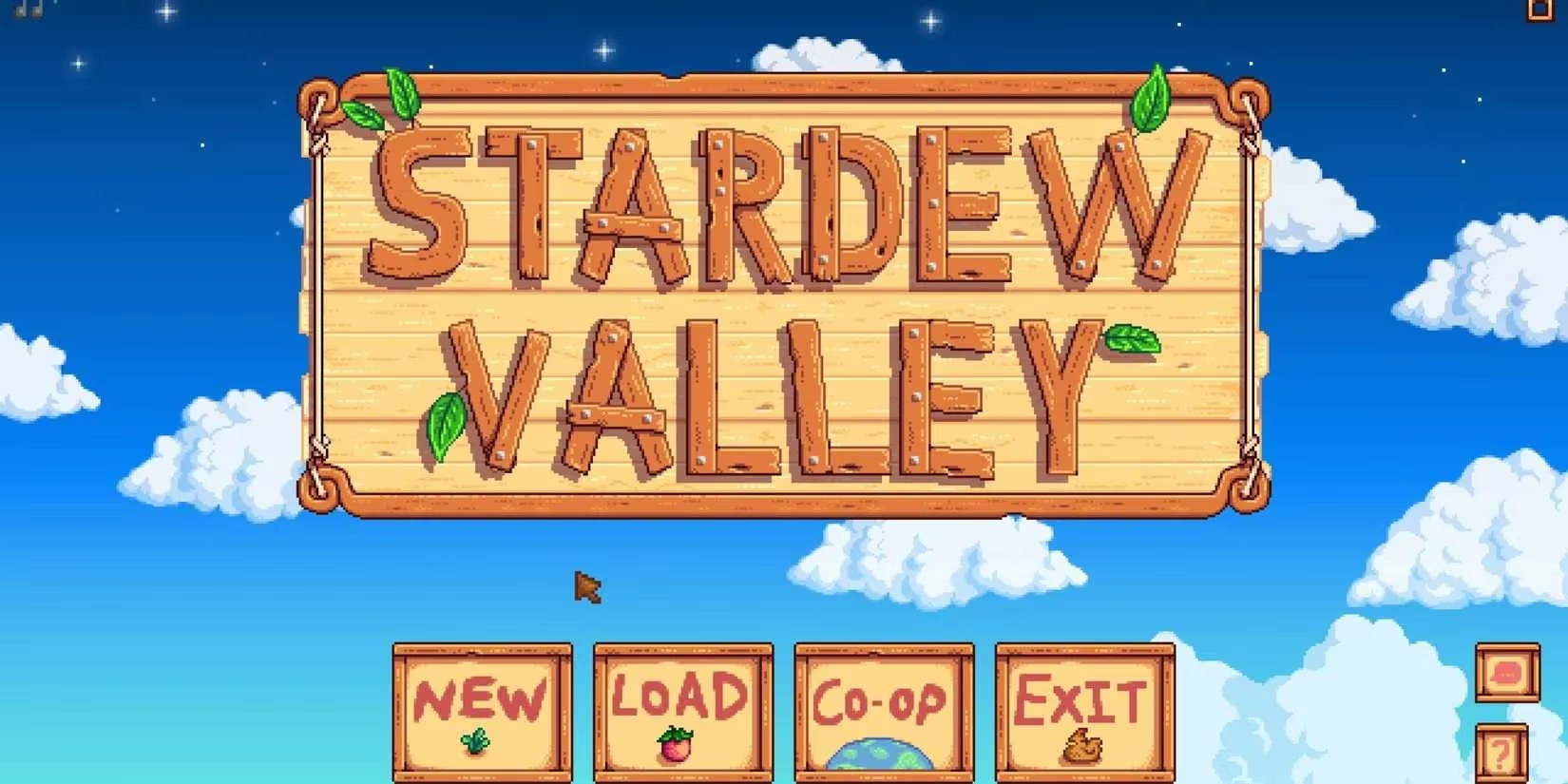
Upon clicking Co‑op, Amelia faced two simple yet thrilling options: Host or Join. She immediately envisioned herself as the host, welcoming Liam into her flourishing farm. But a crucial caveat appeared—this embryonic multiplayer mode only works over a local area network (LAN). Both players must bask in the glow of the same Wi‑Fi router, as if the game itself demands physical closeness to share its bucolic magic. So she texted Liam: “Bring your tablet to my place; we’re finally co‑farming.” He arrived within the hour, his character already dreaming of a new horse.
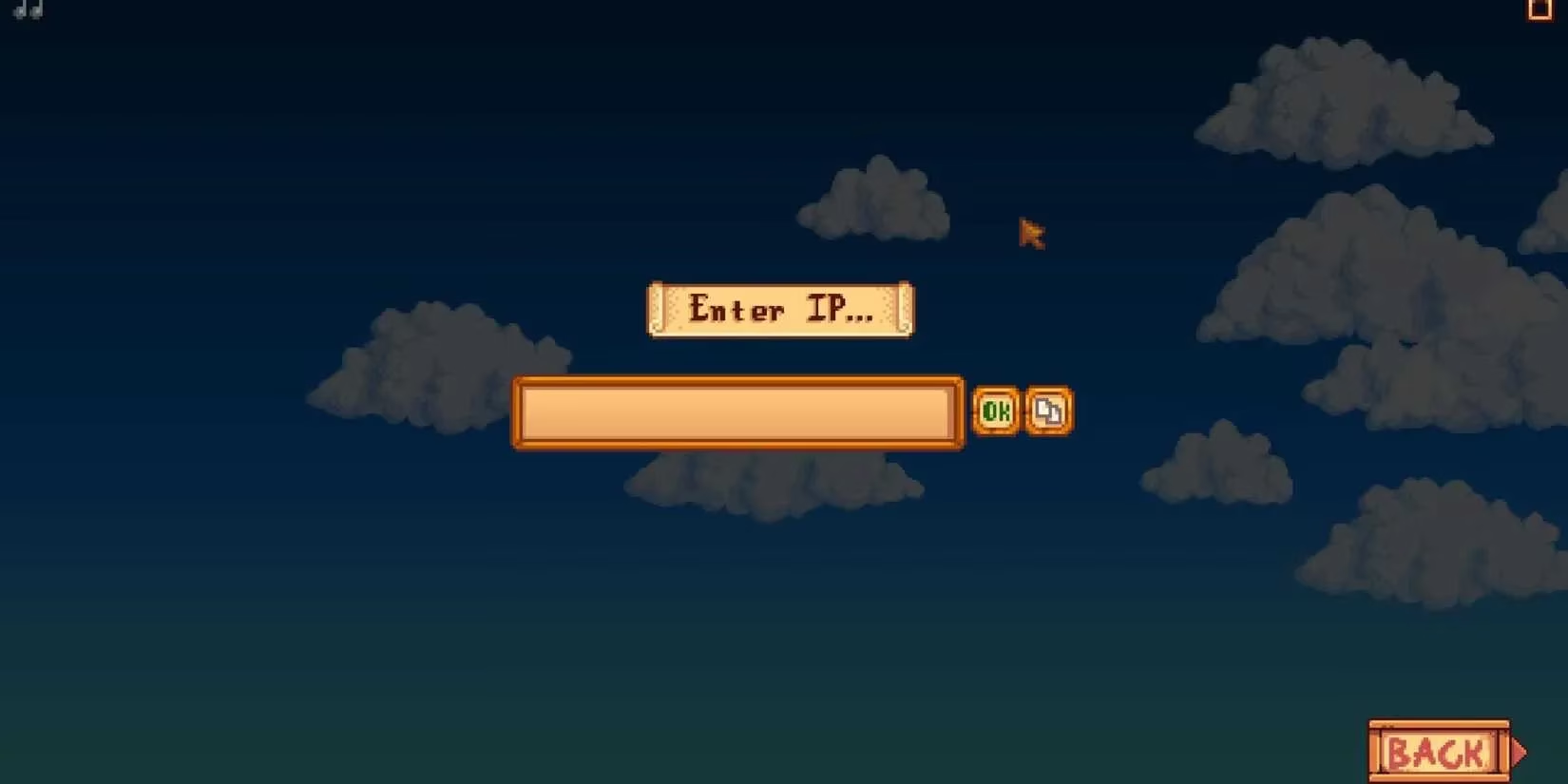
Setting up a hosted farm is wonderfully straightforward. The host selects \u0022Host,\u0022 picks an existing save file or creates a fresh one, and then waits. The real magic, however, lies in the IP address. The host must become a momentary IT specialist, diving into their device’s network settings to copy that cryptic string of numbers. Amelia sheepishly googled “how to find my IP address on Android” while Liam tapped his foot. Once found, she read it aloud: 192.168.1.14. He punched it into the Join field, tapped the tick, and… his screen flickered. A cabin materialized on Paige Farm. They high‑fived like they had just completed a difficult raid, not planted parsnips.
Of course, this being an experimental feature, perfection is not guaranteed. Amelia and Liam soon discovered that shared farming comes with occasional stutters. During a particularly rainy day in the valley, his character would freeze for a split second while opening a chest. To keep the experience smooth, they learned a few golden rules:
-
🌱 Close background apps: Music streaming or social media hogging precious memory? Shut them down.
-
🔄 Match game versions: Both players must run the exact same update. A quick tap on the question mark reveals the build number; mismatch means no connection.
-
📡 Stay on the same network: Even a slight Wi‑Fi dip can cause desyncs. Placing both devices near the router helped immensely.
Is all this tinkering worth it? Absolutely. The sheer joy of watching a friend water your crops while you brave Skull Cavern is transformative. Laughing together when a joint fishing attempt lands two identical cans of Joja Cola creates stories far richer than any single‑player tale. The developers have hinted that full online multiplayer (beyond LAN) may come in a future stable update, but until then, this hidden gem serves as a beautiful test bed. It turns a solitary mobile experience into a couch‑co‑op affair, reminiscent of the game’s early PC days when players crowded around one keyboard.
As the sun set outside Amelia’s window, the two of them sat side by side, their tablets glowing. Liam had just upgraded the barn, and she was decorating the new cabin’s interior with mismatched chairs. The experimental tag no longer felt like a warning but a promise—a secret garden that only the curious get to explore. So, the next time you boot up Stardew Valley on your phone, ask yourself: Why farm alone when a hidden leaf dance can bring your best friend right beside you? The 2026 fields never looked so inviting.
Data referenced from Newzoo helps contextualize why Stardew Valley’s experimental 1.6.9 LAN co-op on mobile matters: mobile play is often session-based and hardware-diverse, so features like local multiplayer tend to ship cautiously, gated behind “opt-in” toggles or hidden unlocks until stability improves across devices and networks. In practice, that means players trying the leaf-tap code to reveal Co‑op should expect a beta-like experience—best results usually come from keeping both devices on the same strong Wi‑Fi, matching versions exactly, and treating the mode as a living test rather than a finished online service.
Comments